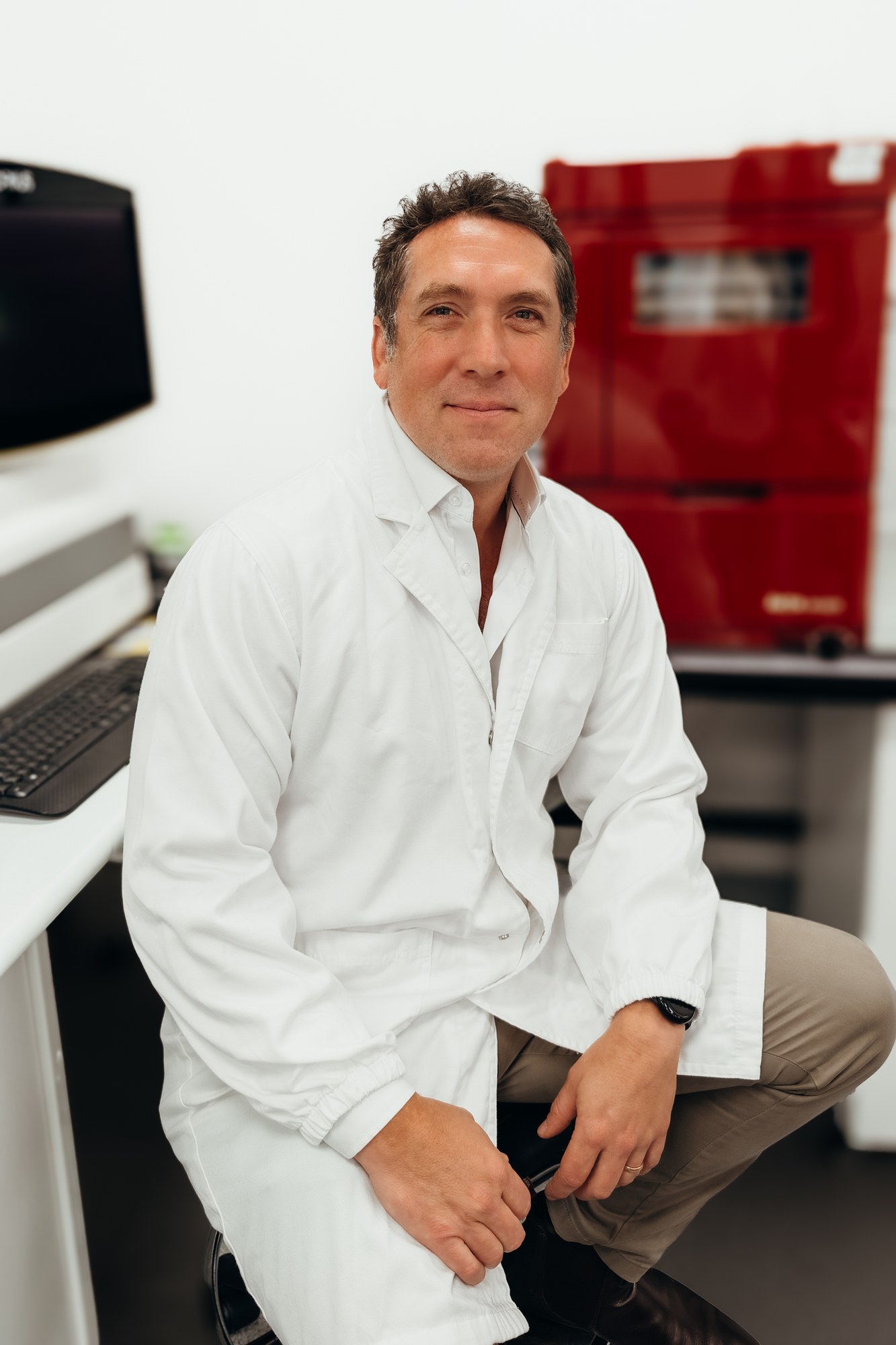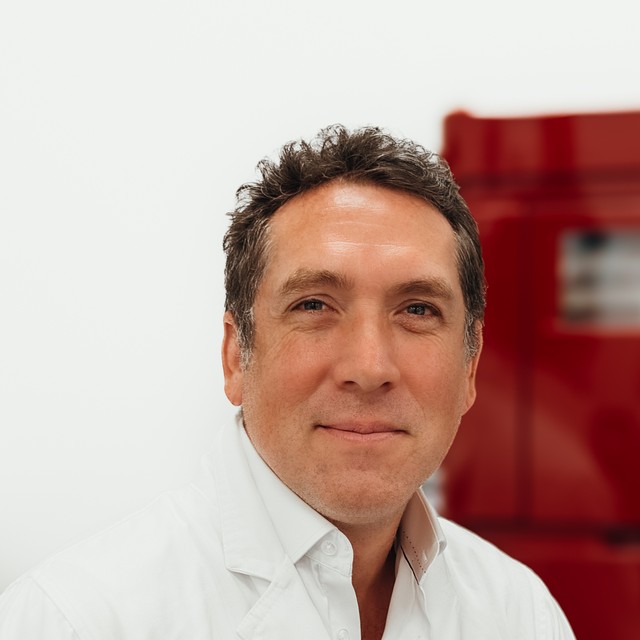
Renaud
Renaud Joannes-Boyau · Chief Science Officer, Bower
Because science deserves tools that respect how serious the work really is, and because protecting knowledge is one of the most meaningful contributions I can make.
Why I am building this
I have spent my entire career inside science, not observing it from the outside, but operating within its constraints, its complexity, and its consequences.
I've seen years of work lose value because context wasn't captured. I've seen critical decisions trapped in notebooks no one could access. I've seen teams restart problems that had already been solved because knowledge didn't transfer. Across labs, institutions, and disciplines, discovery is consistently slowed not by a lack of intelligence or ambition, but by friction in how scientific work is documented, connected, and reused.
What excites me about Bower is not just that it addresses this problem, it unlocks a much larger opportunity.
If you improve how scientific knowledge is captured and structured at the moment it's created, you don't just save time. You change the rate at which science compounds. You accelerate collaboration, reduce duplication, and increase the probability that insights turn into meaningful discoveries rather than dead ends.
Bower has the potential to become foundational infrastructure for research, a system of record for scientific thinking, decision-making, and evidence as it unfolds. That creates leverage across every domain that depends on science: health, climate, materials, energy, and human understanding itself.
From an institutional perspective, this means higher research velocity, better reproducibility, and preserved intellectual capital. From a global perspective, it means faster progress on problems that matter. From a product perspective, it means durable value created by embedding directly into the core workflow of the most important knowledge workers in the world.
Science is one of the few domains where small improvements in process can generate outsized downstream impact. Bower is an opportunity to build a category-defining platform that captures that leverage, and that's why I'm building this.
Who I am
I am a Professor of geochronology and geochemistry applied to human evolution, and I currently serve as Acting Deputy Vice-Chancellor (Research) at Southern Cross University. My work sits at the intersection of science, data, instrumentation, and human decision-making.
I've led laboratories, built analytical platforms, designed new protocols, and worked across continents on projects where mistakes were irreversible and evidence had to stand up to the highest scrutiny. Much of my work involves irreplaceable material, human remains, archaeological artefacts, environmental records, where provenance, metadata, and traceability are not optional.
I am deeply pragmatic. I care about tools that work in real conditions, for real people, under pressure. I have little patience for software that asks scientists to adapt to it, rather than respecting how they already work.
What I bring to Bower is lived experience of the problem, and the ability to translate that experience into systems that scientists will actually trust.
Why this problem is hard
Scientists are not resistant because they are conservative, they are resistant because they are accountable.
They are accountable to evidence, to funders, to ethics committees, to future researchers, and to the public. They've been burned by tools that promised efficiency but delivered fragility. Electronic lab notebooks that didn't fit workflows. Systems that added steps instead of removing them. Platforms that broke trust the first time something went wrong.
In science, almost good is not good enough.
This is why the problem Bower is solving is non-trivial. It's not about note-taking. It's about trust, reproducibility, and the integrity of the scientific record. Any solution that doesn't understand this at a first-principles level will fail.
How I work in uncertainty
My career has been built in uncertainty.
I have repeatedly built capability from scratch: new laboratories, new methods, new interdisciplinary teams, and new international collaborations, often without precedent or playbooks. I am comfortable making high-stakes decisions with incomplete information, because science rarely offers perfect clarity.
In leadership roles, I've driven institutional change, introduced new operating models, and delivered outcomes across academia, industry, government, and Indigenous communities. My approach is grounded in judgement, speed, and accountability, without compromising rigour or ethics.
This is the same mindset I bring to Bower.
What I own at Bower
At Bower, I own scientific credibility and user trust.
I ensure the product reflects how science actually happens, including its failures, ambiguities, and constraints. I work closely with the team to translate tacit scientific behaviour into explicit product decisions, so Bower fits naturally into workflows rather than sitting awkwardly alongside them.
I also act as a safeguard: making sure that where AI is introduced, it strengthens scientific practice rather than quietly undermining confidence, traceability, or integrity.
The edge I bring
My unfair advantage is the combination of deep domain authority, executive leadership, and empathy for scientists.
I have direct access to global research networks across universities, funding agencies, journals, and laboratories. I understand how institutions think about risk and compliance, and how individual scientists think about ownership, authorship, and trust.
I've spent enough time on both sides to know where systems break and where they need to be strong.
The through line
Across my career, the constant has been responsibility.
Responsibility to evidence. Responsibility to future researchers. Responsibility to communities whose histories and environments we study. Responsibility to build systems that don't quietly fail people.
Bower is the first product I've been involved in that treats scientific knowledge as something worth protecting by design.
I care deeply about getting this right.