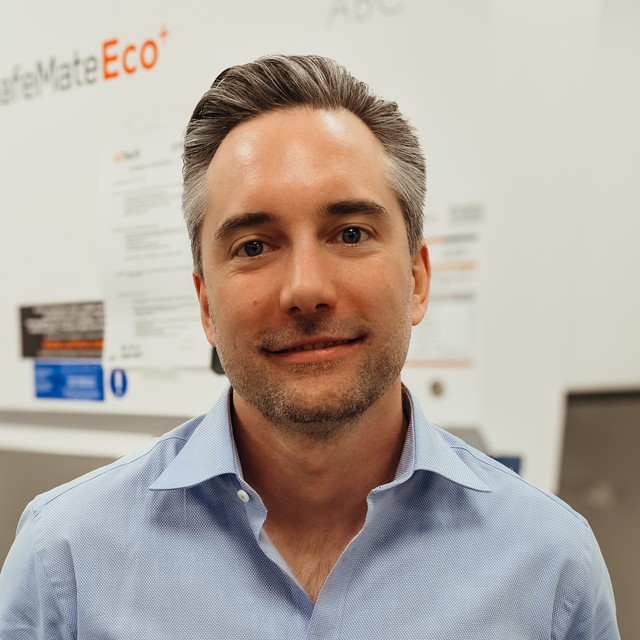
David
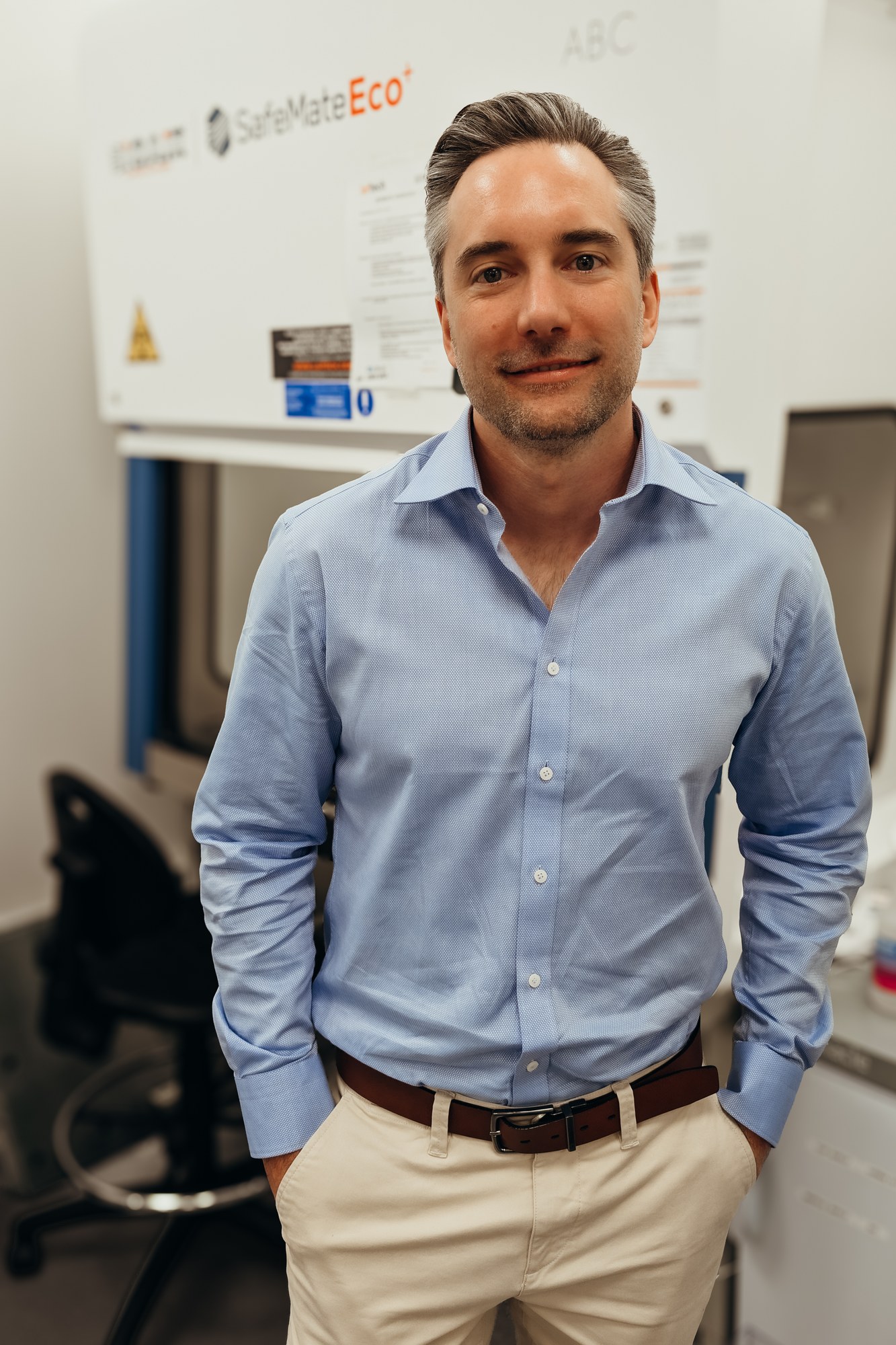
David Lyon · CTO, Bower
Because accelerating scientific discovery is the most meaningful technical challenge I have ever had the chance to solve.
Why I am building this
Science moves too slowly, and it's not because scientists aren't brilliant enough.
My father spent his entire career as a scientist in both clinical and R&D pathology labs. Growing up around science shaped my perception of the world. Science is what's enabled every revolution that matters: the technologies we rely on, the medicines that save lives, the understanding that drives human progress. But the infrastructure supporting scientific work hasn't kept pace with what's possible.
What excites me as a technologist is that scientists and engineers share the same DNA: unbounded curiosity and a hunger to understand the world around us. The opportunity to build AI-native infrastructure at the exact moment where it can fundamentally change scientific workflows is what drew me in. We're architecting systems that combine graph data stores for representing knowledge relationships, retrieval-augmented generation for contextual AI assistance, and wearable technologies for seamless capture, all designed around a single principle: the technology should disappear into the workflow and amplify what scientists do best.
Leadership roles at scale have given me distance from the immediate impact of what I build. I miss the directness of writing code and architecting systems that solve a real problem for real people, the kind of work that keeps you going past midnight because you can see exactly how it will help someone tomorrow. Bower brings me back to that.
When Michelle reached out, someone I've known since we were young teenagers, whose passion for technology and problem-solving I've always respected, I immediately saw what Bower could be. Not just a product for scientists, but a foundational platform that accelerates scientific discovery. Creating lasting impact requires more than just an idea, it requires exceptional people. With Michelle, James, and Renaud each bringing distinct expertise and vision, I believe we can build a step change in impact to the industry.
Who I am
I've always needed to know how things work, not just conceptually, but hands-on.
As a kid in the 90s, I spent hours on HowStuffWorks, printing its webpages to take on family holidays, consuming anything from the observable universe to combustion engines to how CD players worked. My local primary school had one computer in the entire building, and I'd use any tactic to get the most time on it. The magnetic force that drew me in was gaming, then naturally I had to try my hand at my first basic program: a pool table simulator written in Delphi.
At 12, I built my first computer from components I bought at backyard sales, riding my bike around town with saved pocket money, then spending weekends with mates swapping motherboards and video cards to see what we could make run faster.
Inspired by my father's scientific world, my path took me to Mechatronics Engineering, including a stint at UC Berkeley studying classes like advanced fluid dynamics. I have vivid memories of the pain and joy during my thesis, where I wrote the entire embedded C flight controller from scratch for a petrol-powered UAV, a one-third scale Piper J-3 Cub (yes, it actually worked, and no, back then you couldn't find a drone in every corner store). That combination of hardware constraints, real-time systems, and the need for absolute reliability shaped how I think about building software that matters.
These days, my fuel comes from my incredible wife and two endlessly curious daughters. Seeing the world through their eyes, every why and every how does that work, reminds me why asking questions never gets old. I recharge my batteries camping in the wilderness, am a passionate supporter of too many sports, and after travelling the world more than once I'm glad to have found home in our coastal surf town.
How I build teams
I'm anchored by a simple truth: sustained impact is created through people. When you invest in their growth, the outcomes we achieve together far exceed the sum of individuals.
A few short years after starting as a graduate software engineer, I began managing a team of 10 engineers, all but one more experienced than me. The imposter syndrome was real, even if I didn't fully recognise it at the time.
What I learned quickly was that leadership isn't about being the smartest person in the room. It's about creating conditions where talented people do their best work: clarity on what matters, autonomy to make decisions, and a culture where feedback flows freely.
I set the bar high, but I'm relentless about supporting people to get there. I hire for curiosity and adaptability over credentials alone. I give teams ownership while keeping everyone aligned on shared objectives. I encourage healthy conflict, when it's about ideas, not egos, because that tension drives better outcomes.
I've led teams in global enterprises wrestling with legacy constraints and friction in organisational boundaries, in scaleups on exponential growth curves entering new markets, and in seed-stage startups searching for product-market fit. Across all of them, the pattern has been consistent: empower people, measure what matters, and iterate without hesitation.
The through line
I'm grateful to have spent my career in a variety of environments, each time collecting insights and reforming my views.
At Atlassian, I lead an engineering group in Teamwork Graph, a knowledge graph of hundreds of billions of relationships connecting first and third party data. My team is orchestrating agentic skills across the entire company and working deeply in our remote MCP infrastructure. I've learned to balance long-term architectural vision with iterative delivery while keeping technical excellence anchored to real customer outcomes.
At Boardcave and CAVEWIRE, I was Head of Operations running dual businesses, managing accounts, procurement, logistics, marketing, customer success and engineering. I helped shape the startup into Y Combinator acceptance (YC W22) while achieving 175% monthly revenue growth over 12 months. Every decision had real runway implications, which taught me to be ruthlessly pragmatic with prioritisation and relentless about data-driven decisions that actually move the needle.
At Xero, I established two greenfield teams from scratch to build a new tax platform domain, consolidating fragmented systems across multiple jurisdictions into scalable infrastructure. I balanced external stakeholder management with UK customers against the internal complexities of architecting a new environment that empowered internal engineering teams.
At Amadeus, I worked on mission-critical software processing half a billion transactions per day with 99.99% uptime, writing the C++ code to optimise fuel weight balance on commercial aircraft and processing highly sensitive regulatory documents with government agencies across the world.
Leaving a senior engineering leadership role at Atlassian for a seed-stage startup is a deliberate choice. I can see the trajectory of impact Bower can create. If we get this right, we don't just build a successful company. We accelerate scientific discovery itself.