The future of science is augmented, not autonomous
The industry is racing to build autonomous labs that remove the scientist, but for most research the real bottleneck is lost knowledge, and the future is augmenting researchers, not replacing them.
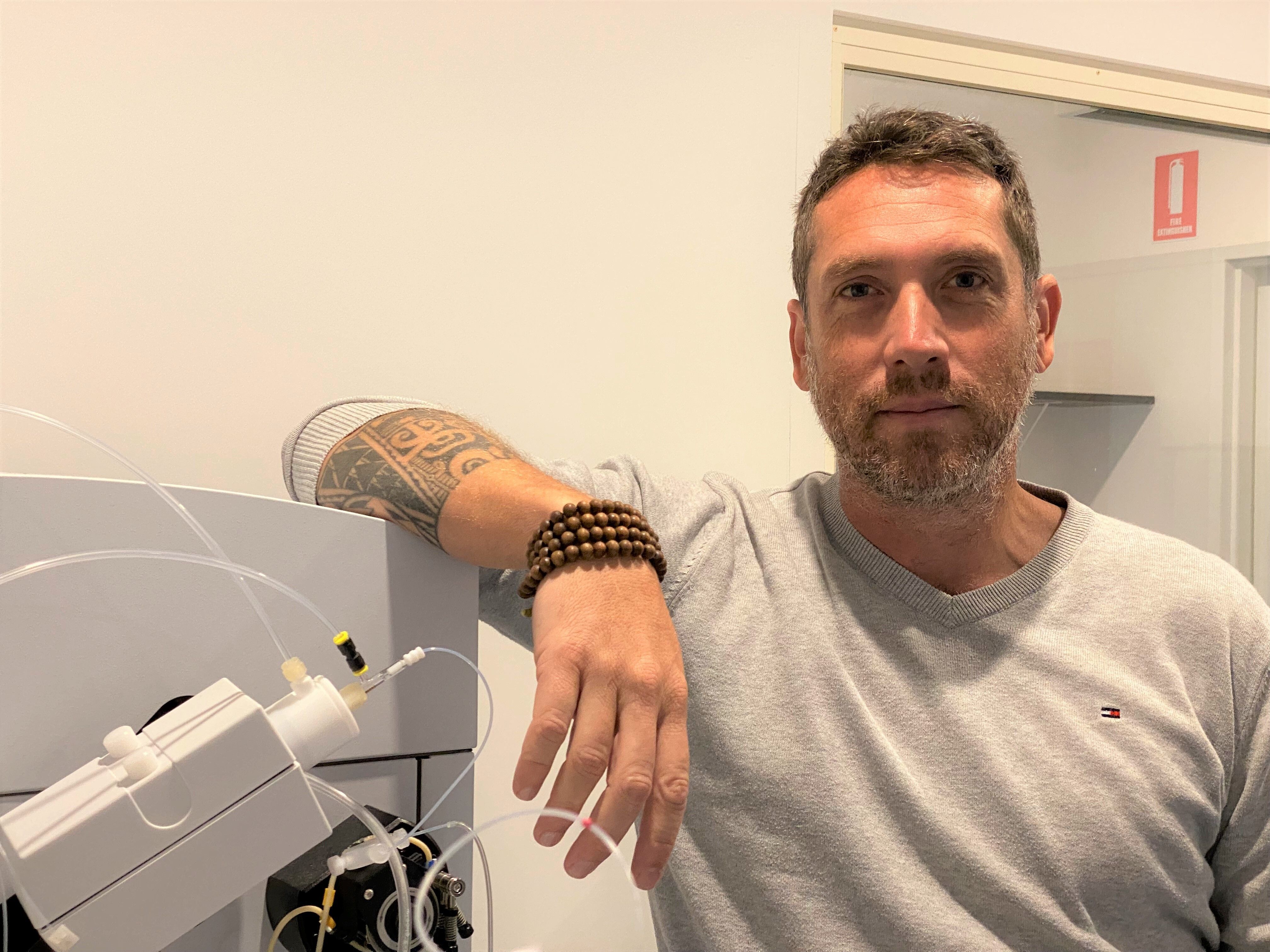
There is a lot of money right now betting that the scientist is the problem.
You can see it in the language. Autonomous labs. Self-driving labs. AI scientists. The pitch, stated plainly, is that human researchers are slow, inconsistent and expensive, and that the future of discovery belongs to machines that run experiments end to end with the person taken out of the loop. It is a genuinely exciting vision, and for a narrow slice of science, the parts that are machine-native from the very first step, it is already real and it works.
I have worked in and run research labs for over two decades now. I have published over a hundred papers and trained dozens of scientists. From that experience, I believe that for the vast majority of science, removing the scientist from the process is not the answer.
The bottleneck was never the scientist
Most research is not machine-native and will not be for a very long time. Experiments rely on researchers making decisions throughout the process, based on their knowledge, experience and what they observe as the work progresses. They recognize when something is not behaving as expected, decide when a protocol needs to be adjusted, and determine whether an unexpected result is an error or something worth investigating further. This scientific judgment is an essential part of the research process, and we are nowhere close to automating it away.
So if the scientist is not the bottleneck, what is?
Lab notebooks are very rarely a complete record of what actually happened. From experience, they are often messy, poorly structured and incomplete. Scientists write down what they think is important, and inevitably leave out things that seem obvious or routine to them at the time. But sometimes those small details, an adjustment to a protocol, an instrument setting, something unusual about a sample, are exactly what another scientist needs when they try to understand or reproduce the work. The notebook contains a record, but a lot of the knowledge still sits with the person who did the experiment.
I have watched colleagues retire after forty-year careers and take most of what they knew with them, sealed inside notebooks nobody else could read. I have watched a brilliant postdoc move overseas and three projects quietly stall the following month. I have watched research teams spend years working through problems that others have already encountered, because much of what was tried before, particularly what failed, was never captured or shared. Failure is part of science, and with new technologies or new knowledge, yesterday's failed experiment can become the starting point for tomorrow's discovery. But only if we know what was tried, how it was done and why it failed.
This is not a rare failure. It is how science normally runs, and the cost is measurable. Around 72% of biomedical researchers say their field faces a reproducibility crisis. More than 70% have failed to reproduce another scientist's results, often their own. Irreproducible preclinical research alone is estimated to cost more than US$28 billion a year in the United States. When a discovery does need to move from one team to another, technology transfer routinely takes twelve months or more and can cost several million dollars per program, because the knowledge has to be painstakingly reconstructed rather than simply handed over.
None of that is a speed problem you solve by removing the human. It is a memory problem. The work was never captured, so it cannot be reproduced, transferred or built upon.
Two paths
Science is splitting into two paths.
One path is autonomous: take the human out. It will matter enormously for the machine-native corner of research, and I am glad people are building it.
The other path is augmented: keep scientists at the center and give them the tools to be even better at what they already do best. Capture what the scientist does as they do it, hands free, without breaking their focus. Turn it into knowledge the whole organization can search, reuse and build on. Free the researcher from the documentation and the admin so their judgment, the thing no machine has, is all they have to spend their attention on.
I am giving the rest of my career to the second path. I don't believe that, as scientists, we need to be replaced. What we need is to be better equipped. We need tools that allow us to focus on the parts of science where our experience, knowledge and judgment matter most, while technology takes care of much of the admin burden around us.
This is the category we are building, and it deserves a name: augmented research. In the next piece my co-founder Michelle will describe what it actually looks like in a working lab. For today I only want to leave you with the choice, stated as plainly as I can.
The answer to science's problems is not fewer scientists. It is scientists with better tools, scientists who never lose what they learn. While others are building to remove the researcher, we are building to give scientists more capacity to do what only scientists can do.
Bower is the operating system for research, pioneering augmented research as the human counterpart to the autonomous lab. If this is the future you want to work in, we would like to hear from you: bowerlabs.ai.