IP due diligence: what investors ask, and why most labs can’t answer cleanly
By the time diligence starts, the science has already convinced someone. The harder question is whether you can prove who did it, when, and why, from records that were never built to answer to an outsider.
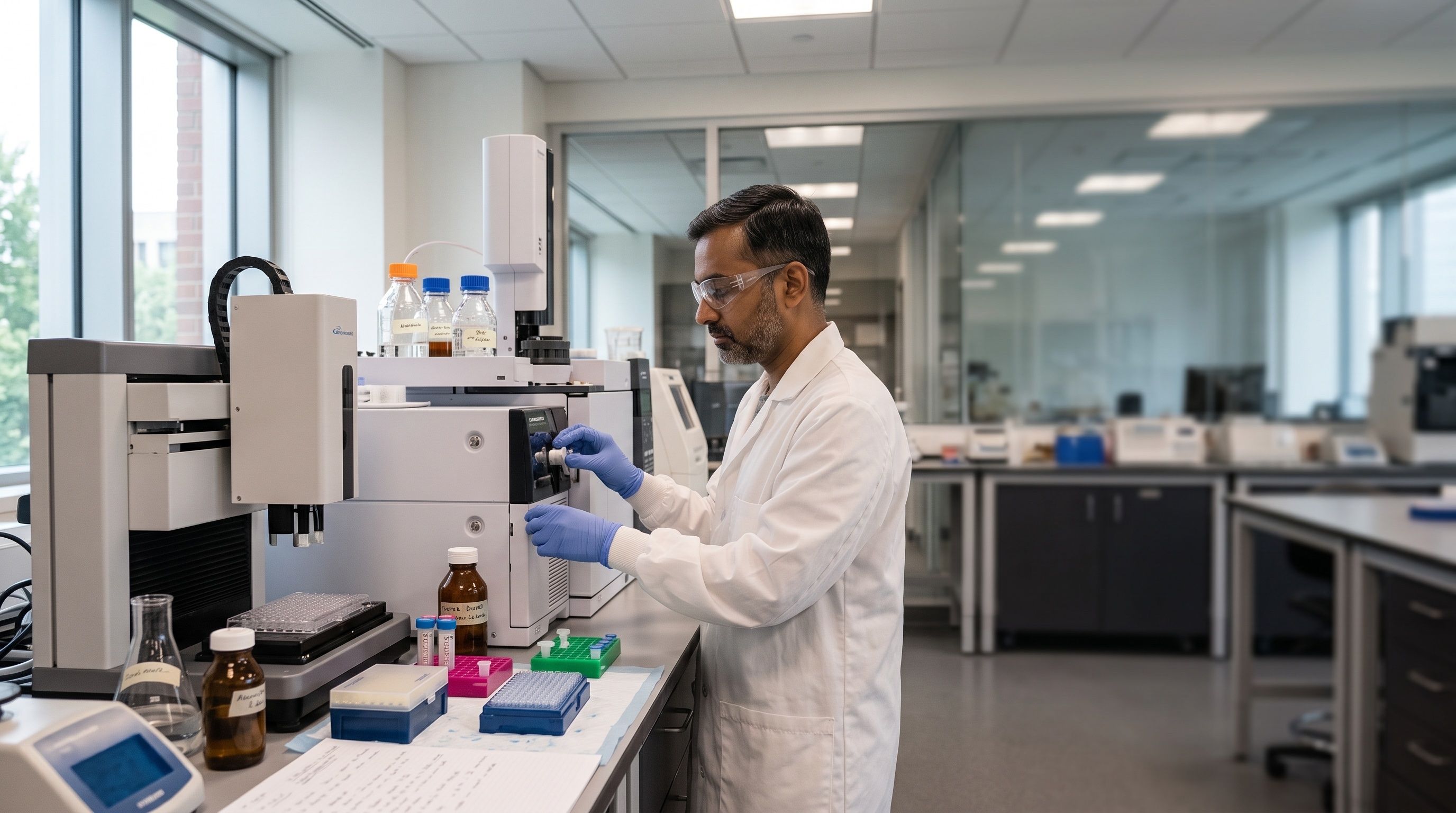
Somewhere in your data room right now, a diligence team is asking a question your lab notebooks were never built to answer. Not whether the science works, but whether you can prove who did it, when, and why.
By the time an R&D organization sits down for IP due diligence, the science has usually already convinced someone: a term sheet is on the table, an acquirer has expressed interest, or a licensing partner wants exclusivity. The question is no longer whether it works. It’s narrower and more uncomfortable. Can you reconstruct the chain of custody behind the invention well enough that a court or a competitor couldn’t pull it apart?
Most R&D teams can’t. Not because the science is weak, but because the record of how it was produced was never built to survive someone else’s scrutiny.
What investors and acquirers ask
IP diligence checklists are remarkably consistent across law firms, and they go well beyond patents on file. A practical biotech due diligence checklist lists signed patent assignments and IP agreements as baseline requirements, and singles out assignment records as an area where company records are commonly incomplete, something it warns will almost always be flagged during diligence[1].
From the investor side, a pocket guide to bio and pharma IP due diligence frames the core task as a sequence: establish where the invention was created, who the inventors are, whether any third parties were involved, and only then who legally owns it[2].
Strip away the legal language and the same pattern holds in both. Diligence isn’t testing whether IP exists. It’s testing whether you can reconstruct the chain of custody behind it: who ran the experiment, when, and why.
The challenge is rarely the invention itself, it’s evidencing who invented it and how it was conveyed.
What a biotech due diligence checklist covers
Before a raise, an acquisition, or a licensing process, an R&D organization should be able to point to:
- patent applications and granted patents, documented and current
- inventors and contributors clearly identified
- employee and contractor IP agreements in place
- signed, current IP assignments
- third-party contributions and collaborations on record
- experimental records that establish authorship and dates
- key decisions and deviations that can be traced
- supporting data connected to the relevant experiment
- a clear audit trail
Most of those depend on evidence generated during execution, not documents produced once a transaction begins. That is where the gap opens.
Why lab notebooks aren’t enough on their own
Most commercial R&D teams run on paper notebooks, scattered spreadsheets, and institutional memory sitting in a handful of senior scientists’ heads. It works day to day, right up until someone outside the company needs to independently verify what happened. The hallway conversation that changed a parameter mid-run typically never made it into any system at all.
More than 70% of researchers have tried and failed to reproduce another scientist’s experiments[3].
Usually it isn’t the method that’s missing, it’s the execution context and the judgment calls that never got captured anywhere searchable.
Paper notebooks were kept for exactly this reason: a signed, dated, contemporaneous record that could stand as proof of invention. Most guidance on lab notebook best practices still centers on legibility, permanent ink, and witness signatures. Useful, but incomplete once diligence starts asking for reasoning rather than entries.
The real question isn’t what you recorded. It’s whether someone outside the lab could reconstruct what happened, and how you got there.
The provenance gap
Take a discovery made over eighteen months of R&D. The company has a patent application, results, notebooks, raw data, protocols, and signed employee agreements. On paper it looks complete.
Then an investor asks who first conceived the approach. The team knows. When did that happen? Someone goes looking through a notebook. Why did the conditions change three months in? The answer is somewhere: an experiment note, a Word document, an email, or someone’s memory. Can you show the record that connects that decision to the resulting IP?
The information usually exists. It just isn’t connected, attributed, or retrievable, and that gap is precisely what diligence is built to find.
Mapped against what a diligence team is actually trying to establish, the pattern is consistent:
| Documentation gap | What diligence needs to establish | With Bower |
|---|---|---|
| Inventorship pinned to memory, not a date | Who contributed, and when | Every entry timestamped and attributed at execution |
| Assignment records that don’t match who did the work | Which person actually did the work | Provenance tied to the person, not a shared login |
| No line from “we tried this” to the data | Why the approach changed | Reasoning captured alongside the result |
| Deviations that vanish or resurface as inconsistencies | What changed, and why | Exceptions logged with a reason, at the time |
| Months of loose notes for a diligence team to read | A traceable history of key decisions | A diligence team queries by date, person, or decision |
Why the record has to exist at execution
You cannot retrofit attribution or timestamping onto a decision that was never recorded. Once the moment has passed, all that’s left is reconstruction, which is exactly what diligence is designed to catch.
When the requests land, teams discover the gap under time pressure with a deal clock running, pulling scientists off active work to rebuild months-old decisions from partial notes and email. That cost compounds the way undocumented expertise already costs R&D teams elsewhere. The onboarding tax every R&D lab pays runs $150,000 to $250,000 per hire[4] for the same underlying reason: knowledge that was never written down. IP diligence is that same problem on a tighter deadline, weeks to reconstruct rather than months to onboard.
Capturing context as it happens removes the reconstruction step entirely. The record already exists, so there is nothing to rebuild.
How Bower builds provenance at the bench
Bower captures scientific work as it happens, voice notes, photos, observations, and decisions, without asking researchers to stop and document separately. Every entry is structured around who, when, what, and why, timestamped at execution rather than reconstructed later.
That becomes a searchable, provenance-backed record, hosted under your control with a full audit trail. When a diligence team asks who conceived an approach and when, the answer is a query, not a scramble. Because your records stay yours rather than feeding a shared model, organizations holding IP for external clients don’t have to treat data leakage as the price of a better record.
The takeaway
Labs don’t choose when diligence questions arrive. What they choose is whether the record is ready before the questions get asked, which is why commercially active labs increasingly treat diligence readiness as a state to maintain, not a task to start once a deal is live.
The organizations best positioned for diligence aren’t the ones with the most documentation. They’re the ones that can trace their most important IP back to the people, decisions, and evidence that created it.
Build a research organization where every decision is provable the day it’s made.
Book a demo to see how Bower gives your team a complete, traceable record of the work behind your IP.
Frequently asked questions
What is IP due diligence?
It’s the process of assessing the ownership, validity, provenance, and risk profile of a company’s intellectual property, covering patents, inventions, research records, contributor agreements, licenses, and IP assignments. Most of that evidence has to already exist before diligence starts, which is why Bower captures the who, when, what, and why of R&D work as it happens, rather than after a deal is on the table.
What does a biotech due diligence checklist typically cover?
Patent applications and grants, IP assignments, employment and contractor agreements, licenses, collaboration agreements, and laboratory records that support a company’s claim to ownership. Bower doesn’t replace the legal half of that list, but it keeps the experimental half, authorship, dates, and reasoning, in one searchable, provenance-backed record instead of scattered across notebooks and inboxes.
Why aren’t lab notebooks enough on their own?
Notebooks provide contemporaneous evidence of what was done, but they rarely capture the reasoning behind a decision or a deviation, and that context is what diligence teams actually ask about. Good lab notebook best practices still matter for a signed, dated record; Bower adds the layer notebooks were never built for, capturing the reasoning behind an entry at the moment it’s made rather than reconstructing it from memory later.
How do you build IP provenance into everyday R&D work?
By attributing and timestamping decisions, observations, and evidence as the work happens, rather than reconstructing that history once a transaction begins. This is what Bower is built around: it turns voice notes, photos, and bench decisions into a structured record automatically, so provenance exists from day one instead of being assembled under deadline.
References
- IP Diligence Checklist: Assure Your Company’s IP is in Order Before Reaching Out to Potential Investors or Acquirers, Double Helix Law.
- Pocket Guide to Bio and Pharma IP Due Diligence, Venner Shipley.
- Baker, M. 1,500 scientists lift the lid on reproducibility, Nature 533, 452–454 (2016). Survey of 1,576 researchers.
- Figure based on Bower’s field conversations with R&D leaders across biopharma, cell & gene therapy, and academic organizations (2025–2026).