Augmented Research
Bower CEO and co-founder Michelle MacRae on augmented research: ambient intelligence that captures the work as it happens, so scientific knowledge is never lost and the scientist stays at the center.
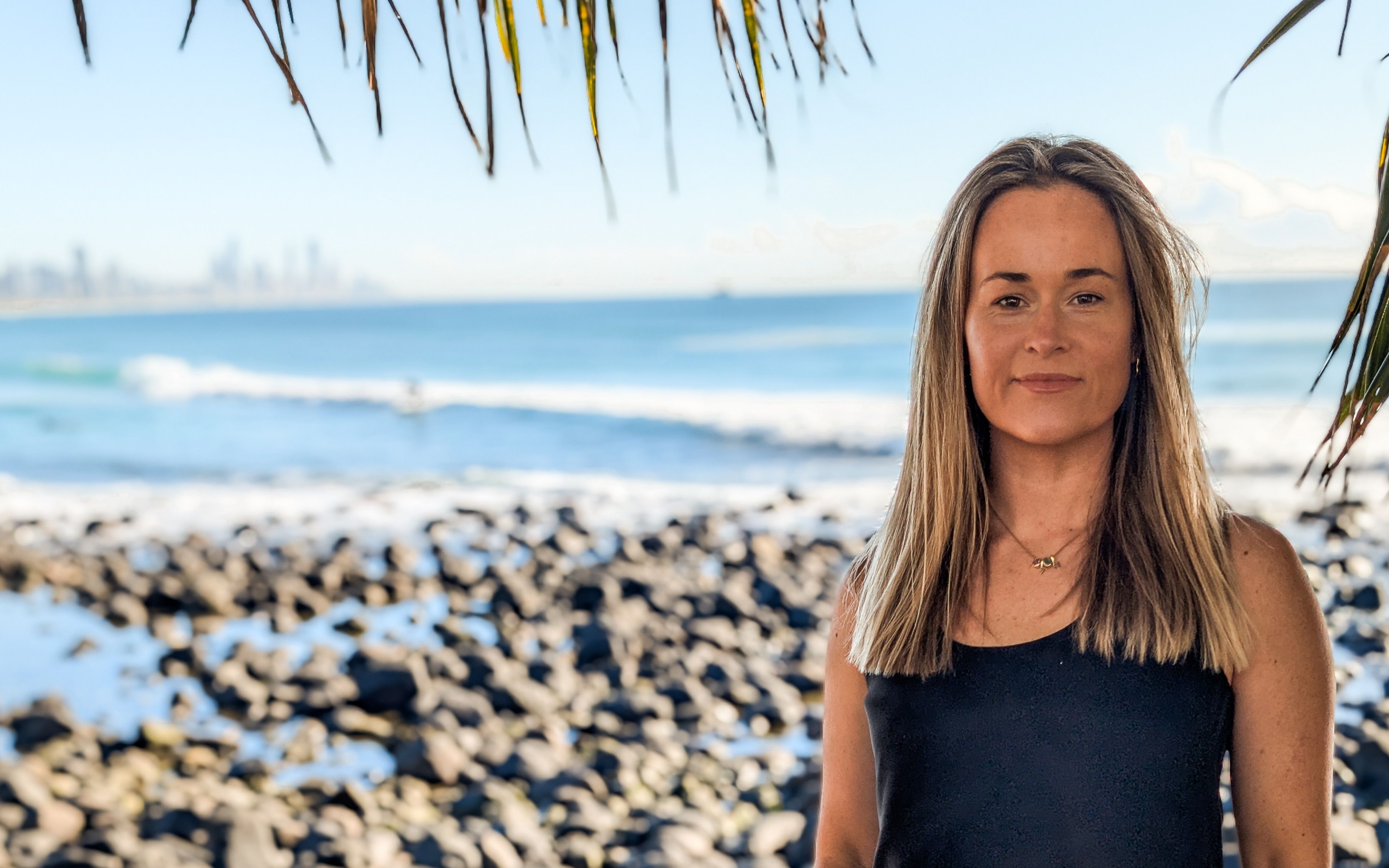
For a decade I have been building toward one conviction: that the most valuable thing artificial intelligence can do is not replace human experts, but let them find their flow and focus on the things they do best. I have pursued that idea through Google, Dovetail and Microsoft, and I left to start Bower because there is one place it matters more than anywhere else, and where it is most overdue. The lab.
Right now the science and technology world is pouring its money and its imagination into a single picture of the future: the autonomous lab. Machines running experiments end to end, the scientist taken out of the loop. It is a compelling story, and for a narrow slice of research it is already real. But it is the wrong bet for the overwhelming majority of science, which is, and will remain, human.
The bottleneck in science is that so much of scientist's work is not captured. As Renaud shared yesterday, every experiment is hundreds of small decisions: a protocol adjusted mid-run, a strange result worth chasing, an observation that turns out to matter. Almost none of it is ever captured. It lives in one person’s head until that person leaves. The cost is enormous and well documented. Most researchers cannot reproduce one another’s results, and irreproducible preclinical work alone is estimated to waste more than US$28 billion a year in the United States. We do not have a shortage of brilliant scientists. We have a system that doesn’t work how they do.
The answer to that is augmented scientists. Ambient intelligence that works alongside the researcher, seeing and hearing the work as it happens, capturing decisions and observations without interrupting their flow, and turning that work into permanent organizational knowledge. Nothing lost, nothing reconstructed from memory, no one buried in admin. We call this augmented research, and the person at its center is the augmented scientist. The research stays human. It honours the art of scientific discovery, and keeps the scientist as the one making the judgment calls.
I did not arrive at this conviction by chance, and I am not new to making a vision become a reality.
At Google I built Task Mate, a platform that put paid work into the hands of people across Kenya, India and Mexico while capturing the diverse human data that makes AI more inclusive. That is where I learned the principle that has guided every decision since: the quality of any intelligent system is set by the quality and breadth of what it captures. Fix the input and everything downstream improves. Science has the input problem in its most extreme and most consequential form.
At Dovetail I built the product that became their channels business. Companies were drowning in customer feedback, far more than any team could ever read. We built AI to understand it for them, so people could stop fighting the volume and do the human work of judgment and response.
At Microsoft, I led the creation of an entirely new category: an AI video agent that transformed video creation from a specialist skill into something anyone could do.
My career to date has set me up perfectly to lead Bower. I love that we can lift the administrative weight off researchers entirely. Grant applications, investor updates, patent filings, drafted with provenance from the work they did in their lab, so they can spend their time on discovery instead of documentation.
I love that we can make those documents more human as well as more accurate. A video SOP can show a manufacturing operator exactly how something must be done in a way text never will, and getting that right is the difference between a therapy made correctly and available on the market in months not years.
And I love where this leads. An augmented future for research includes proactive ambient intelligence that stops a researcher before they make a mistake or personalized world models for labs, so a trainee can learn to work in an environment before ever setting foot in one. Less wasted material, less senior time spent on the basics, more people brought up to speed faster. In a field where the world is waiting on the output, and that output takes far too long to arrive, this is what matters most.
The future of science isn't a lab without scientists. It's a lab where scientists can do more than ever before. That is the future we're building at Bower.
Bower is the operating system for research, delivering ambient intelligence across the scientific lifecycle. Learn more at bowerlabs.ai.